
English| EUR
Suggested for you
More currencies
Choose a language
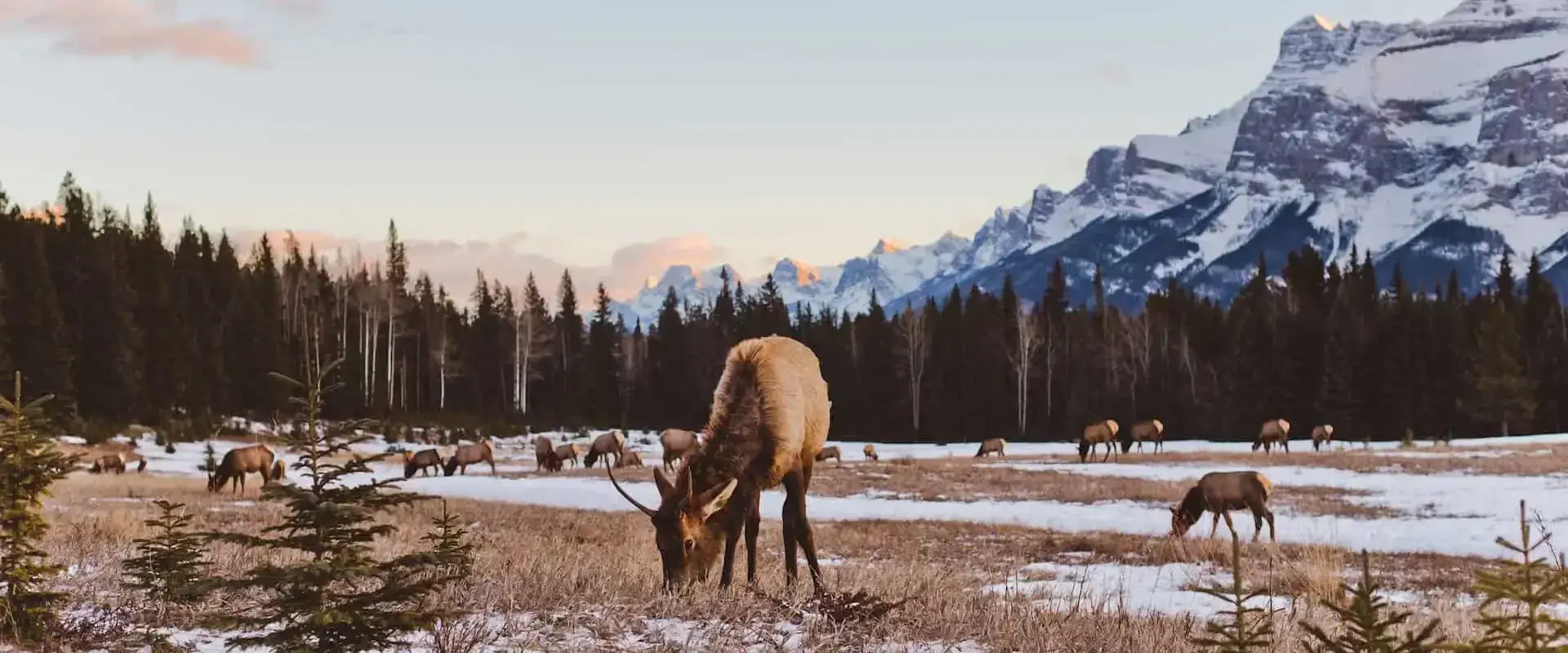
Evening wildlife safaris in Banff attract visitors hoping to spot elk, bighorn sheep, and occasionally bears during twilight hours when animals emerge to feed. Guest reviews from the past 18 months reveal what these tours actually deliver, how guide knowledge shapes the experience, and which seasonal windows produce the most reliable sightings.
Quick answer
Banff evening wildlife safari reviews from 2026 guests report elk sightings on roughly 85 percent of departures between May and September, with bighorn sheep encounters nearly as common along the Bow Valley Parkway. Most reviewers rate guide naturalist knowledge highly, noting detailed explanations of animal behavior and Rockies ecology. Disappointed reviews concentrate in early spring and late autumn when shorter daylight windows compress the active feeding period and reduce sighting probability.
Twilight in the Canadian Rockies triggers a predictable shift: grazing animals move from forest cover into open meadows, and tour vehicles position themselves along migration corridors documented over decades. Reviews written between March 2025 and September 2026 provide the clearest picture of what guests actually encounter on Banff evening wildlife safari tours, separating marketing promises from field reality. The most frequently praised element across banff evening wildlife safari reviews is guide expertise. Guests consistently note that naturalist commentary transforms sightings from passive viewing into ecological education—explaining rutting behavior in September elk, identifying individual bighorn rams by horn curl patterns, and reading weather cues that predict animal movement. Negative reviews almost never cite guide performance; dissatisfaction centers on missed sightings during shoulder seasons or unrealistic expectations set by promotional photography showing grizzlies at close range, an encounter that remains rare even during peak months. Sighting consistency varies sharply by species and season. Elk herds graze predictably near the Vermilion Lakes and along the Trans-Canada Highway wildlife corridors from late spring through early autumn, producing high guest satisfaction in June through August reviews. Bighorn sheep frequent the same cliffsides and mineral licks year-round, making them the most reliably observed large mammal. Bear sightings draw the highest excitement in reviews but occur on fewer than 30 percent of departures; guides emphasize that responsible wildlife tourism prioritizes animal welfare over guaranteed photo opportunities, maintaining distance protocols that sometimes frustrate guests hoping for close-up shots. Reviews from May and June highlight wildflower backdrops and extended daylight that allows longer observation windows. July and August reviews mention increased vehicle traffic in the national park but note that professional guides know alternate routes when main corridors become congested. September reviews capture rutting season drama, with bull elk bugling audible from significant distances. October reviews turn mixed as early snowfall and diminishing light reduce both animal activity and tour comfort. Guests consistently advise future visitors to dress in layers—evening temperatures drop rapidly even in summer—and to bring binoculars, though most operators provide them. The CAD 12.25 daily conservation fee for Banff National Park access applies to all visitors and supports the wildlife corridors that make these sightings possible. Tours depart from central Banff, with operators typically recommending arrival 15 minutes before the scheduled departure between 17:00 and 19:30, depending on season and daylight duration.
“Guide naturalist knowledge transforms passive animal sightings into ecological education that guests cite as the tour's most valuable element.”
The best arrival window for viewing wildlife in Banff is 17:00–19:30. During these hours, twilight and dusk conditions coincide with peak animal activity, increasing the likelihood of sightings.
Warm, 15°C to 25°C daily highs.
Longer daylight hours extend potential observation windows. Animal activity remains consistent during evening transitions.
Cooler, 5°C to 15°C daily highs.
The autumn rut increases movement among elk and deer. Twilight periods offer clear visibility before winter sets in.
Variable, 5°C to 18°C daily highs.
Wildlife often congregate in valley bottoms to graze on fresh growth. Evening safari tours benefit from the emerging vegetation.
Verdict: The optimal time to visit is during the shoulder seasons of May or September within the 17:00–19:30 arrival window to balance wildlife activity levels and visitor numbers.
The Banff evening wildlife safari operates daily, providing continuous access for evening tour scheduling.
Evening wildlife safaris depart from central Banff, Alberta, Canada. Travelers typically arrive via private vehicle or local transport services directly to the designated assembly points within the townsite.
Trans-Canada Highway (Hwy 1) to Banff exit
Roam Transit to Banff town centre
Local dispatch within Banff
Confirm your specific departure point at https://banfftours.com or by calling 1-877-565-9372 prior to your trip. Arriving at the meeting location at least 15 minutes before your scheduled departure ensures a prompt group loading process.
Preparation for evening wildlife excursions requires specific gear and adherence to park regulations to ensure safe and productive observation sessions.
Mountain temperatures drop rapidly after sunset, so bring an insulated jacket and moisture-wicking base layers. Even in summer, evening air remains cool at higher elevations.
Bring binoculars with at least 8x magnification to observe animals from a respectful distance without causing stress. A camera with a telephoto lens of 300mm or greater is necessary for clear images.
Stay inside or near your vehicle when animals are present to minimize human impact on their natural behavior. Never feed or attempt to approach wildlife, as this disrupts their foraging habits and creates safety risks.
Use red-light flashlights if you need illumination, as white light can startle nocturnal animals and hinder your own night vision. Avoid using flash photography, which can blind animals and cause dangerous reactions.
Remain quiet while on location, as sound travels long distances in the thin mountain air and will drive wildlife away. Dedicate time to scanning tree lines and meadows, rather than expecting immediate sightings.
Everything you need to know about banff evening wildlife safari reviews
Most banff evening wildlife safari reviews highlight the opportunity to spot elk, deer, and occasionally bears in their natural habitat. Guests often note that professional guides provide significant insight into the behavior of these Rocky Mountain creatures. Visitors appreciate the focus on ethical viewing practices during these excursions.
Families often find the evening excursions educational and engaging for children. Many banff evening wildlife safari reviews emphasize that the pace is comfortable, allowing younger participants to stay attentive during the journey. Safety is a primary focus, ensuring a secure environment for all passengers.
Past participants frequently praise the expertise of the local guides who navigate the terrain effectively. Recent banff evening wildlife safari reviews suggest that travelers value the clear communication and the high quality of the transport vehicles provided. These accounts offer helpful perspectives for those planning their own visit to the Canadian Rockies.
The best arrival window for spotting wildlife is 17:00–19:30, as animals are most active during twilight and dusk. Aligning your schedule with these hours often leads to more successful wildlife spotting experiences. Consult your booking confirmation to ensure your departure time aligns with these peak activity periods.
Yes, every visitor requires a valid daily adult conservation fee for Banff National Park, which is 12.25 CAD. This fee is mandatory for all guests entering the park boundaries regardless of their tour booking. Please ensure you have your pass ready before reaching the assembly point.
It is recommended to bring layers of clothing to adjust to changing mountain temperatures, as well as a camera to capture the natural scenery. Bringing binoculars can significantly enhance your ability to spot distant wildlife during the excursion. Always remain with your guide and follow their instructions regarding distance from the animals.